
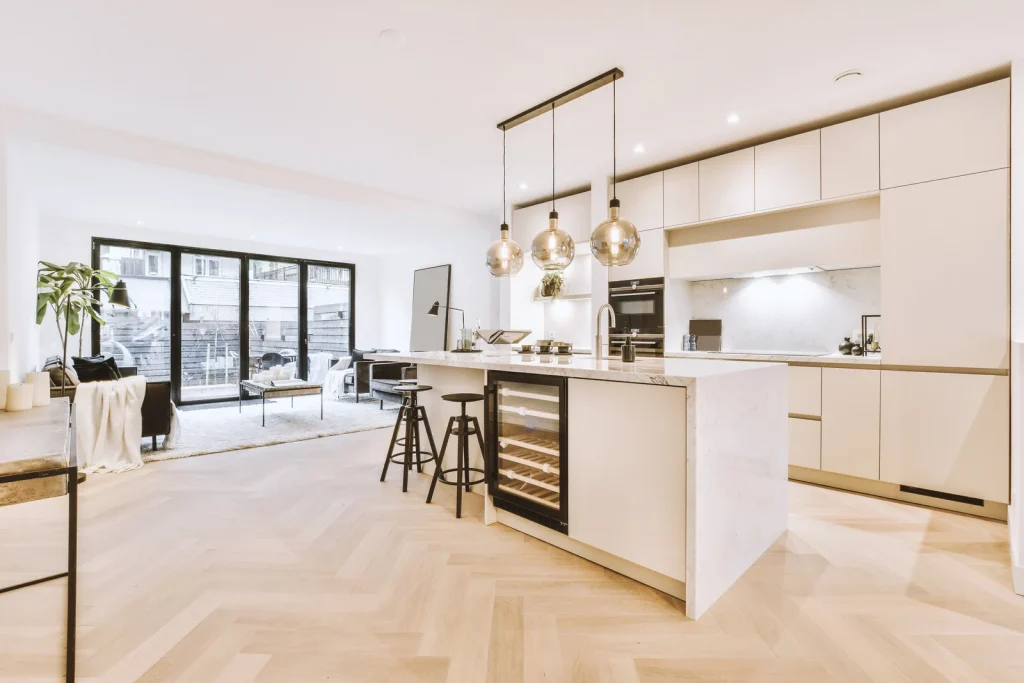
An Expert Family, Design, and Room-by-Room Analysis by North State Tile Design Center
Quick Summary: What Flooring Works Best in a Charlotte Family Home?
The best flooring depends on the room, household traffic, moisture exposure, children, pets, cleaning preferences, comfort, and design goals. Tile and luxury vinyl plank may suit active or moisture-prone rooms, while solid hardwood, engineered wood, laminate, and carpet address different priorities involving natural character, warmth, budget, and softness.
A family floor must support daily routines as well as the home’s design. The strongest choice for a kitchen may not be the right choice for a bedroom, and the material that suits one household may not match another family’s cleaning habits, pets, children, or tolerance for visible wear.
North State Tile Design Center helps Charlotte homeowners compare flooring materials, colors, patterns, and layouts for renovations, remodeling projects, and new spaces. We offer tile, solid hardwood, engineered wood, luxury vinyl plank, laminate, and carpet, allowing families to build a coordinated plan around the way each room is actually used.
1. Start With the Way Your Family Uses the Home
Daily activity should guide the flooring decision before a color or pattern is selected. An entrance used by children and pets faces different demands from a quiet bedroom, formal dining room, or occasional guest space.
Room conditions should also influence the choice. Moisture exposure, sunlight, subfloor construction, furniture movement, adjoining floors, and the condition of the existing surface can affect product suitability and installation.
- Household traffic: Consider how many people use the room and how often shoes, grit, toys, or furniture move across the surface.
- Moisture exposure: Identify kitchens, bathrooms, laundry rooms, entrances, and other areas where spills or dampness may occur.
- Comfort expectations: Decide whether softness, warmth, sound control, or a firm hard surface matters most in the room.
- Maintenance preferences: Compare routine cleaning, product-specific care, grout maintenance, and the household’s tolerance for natural wear.
- Design continuity: Plan how the flooring will connect with cabinetry, wall colors, furnishings, stairs, and adjoining rooms.
2. At-a-Glance: Family Flooring Choices
Each flooring category offers a different balance of appearance, comfort, moisture considerations, and maintenance. The exact product must still be reviewed because materials within one category do not all perform in the same way.
- Porcelain and ceramic tile: Useful for design-focused surfaces and certain moisture-prone rooms when the exact tile is floor-rated and appropriate for the application.
- Luxury vinyl plank: A wood-inspired option that may support visual continuity and relatively straightforward routine care across connected rooms.
- Solid hardwood: A natural wood surface that brings warmth and character to appropriate rooms but can show scratches, dents, and gradual visual change.
- Engineered wood: A real-wood surface over layered construction that may provide additional installation possibilities depending on the product and subfloor.
- Laminate: A wood-inspired flooring category that can balance appearance and budget when the selected product suits the room and moisture conditions.
- Carpet: A softer option for bedrooms, family rooms, and other lower-moisture areas where comfort is a priority.
3. Comprehensive Flooring Profiles
A. Porcelain and Ceramic Tile
Tile can create a practical, design-focused floor for kitchens, bathrooms, entrances, laundry rooms, and other appropriate spaces. Performance depends on the tile type, surface finish, grout, installation, maintenance, and intended application.
Porcelain and ceramic should not be treated as identical. Porcelain is a type of ceramic tile, but individual products can differ in density, finish, texture, and approved use. A decorative wall tile should never be assumed to be floor-rated.
- Design flexibility: Homeowners can compare stone-inspired, wood-inspired, geometric, neutral, and decorative styles with different grout treatments.
- Room suitability: The exact product should be evaluated for moisture exposure, surface texture, cleaning needs, and expected traffic.
- Maintenance planning: Grout color, joint width, cleaning products, and surface finish all affect long-term appearance.
B. Luxury Vinyl Plank
Luxury vinyl plank can suit households that want a wood-look surface with relatively simple routine maintenance. LVP is a plank-format category and should not be used interchangeably with sheet vinyl or every type of vinyl tile.
Product-specific construction determines moisture performance, surface wear, installation, and care requirements. No LVP floor is scratch-proof, dent-proof, pet-proof, or immune to damage.
- Open-plan coordination: One visual style can connect kitchens, hallways, dining spaces, and living areas when the product is approved for each room.
- Preventive care: Furniture pads, routine sweeping, prompt spill cleanup, and manufacturer-approved cleaners can reduce avoidable wear.
C. Solid Hardwood
Solid hardwood provides natural grain, variation, and warmth because each board is made from a single piece of wood. It can work well in living rooms, dining rooms, bedrooms, and other suitable spaces.
Household expectations should guide the decision. Wood species, finish, footwear, pet activity, sunlight, furniture movement, moisture, and maintenance habits can influence how the floor changes over time.
- Natural character: Some families appreciate the patina and variation that develop with use, while others prefer a surface that remains more visually consistent.
- Room conditions: Solid hardwood should not be assumed to suit every bathroom, basement, slab, or moisture-prone area without product and site evaluation.
D. Engineered Wood
Engineered wood combines a genuine wood surface with a layered supporting structure. Its construction distinguishes it from solid hardwood and wood-look laminate.
This category may offer additional installation possibilities depending on the exact product, subfloor, room conditions, and manufacturer instructions. Refinishing potential also varies and should be confirmed rather than assumed.
- Design range: Color, grain, plank width, and finish can support traditional, transitional, or contemporary interiors.
- Project fit: The layered construction may be considered when homeowners want real wood but the site calls for a different approach from solid hardwood.
E. Laminate
Laminate can provide a practical wood-inspired appearance for active household spaces. Its decorative surface and layered construction differ from genuine wood flooring.
Some products may offer improved resistance to routine wear or occasional moisture, but those features vary. Laminate should not be described as universally waterproof, scratch-proof, or suitable for every wet room.
F. Carpet
Carpet can add softness and comfort to bedrooms, family rooms, media spaces, and other lower-moisture areas. Plush, Berber, and textured constructions create different appearances and maintenance needs.
Traffic, pets, children, color, pile construction, and cleaning expectations should influence the selection. Accurate measurements, planned seams, stairs, closets, and transitions also affect the finished result.
4. Choose Flooring According to the Room
- Kitchens and dining areas: Prioritize cleaning, spills, chair movement, traffic, and coordination with cabinetry. Tile, LVP, hardwood, engineered wood, or another approved product may fit depending on the room.
- Bathrooms and laundry rooms: Begin with moisture exposure, surface texture, drainage, grout, cleaning, and installation. Never assume every tile or vinyl product is suitable for a wet area.
- Living rooms and open layouts: Balance comfort with continuity. Hardwood, engineered wood, LVP, laminate, carpet, or appropriate tile can create very different moods.
- Bedrooms: Choose according to softness, warmth, cleaning preferences, and whether the floor should continue into nearby hallways.
- Entrances and hallways: Account for shoes, grit, moisture, pets, and frequent movement. Mats and routine cleaning remain important with every material.
5. Plan Realistically for Children and Pets
Children and pets increase the importance of cleaning, comfort, and realistic wear expectations. No floor is childproof, pet-proof, scratch-proof, stain-proof, or indestructible.
Color and pattern affect how visible fur, dust, footprints, and minor marks appear. Texture can disguise some debris but may require more detailed cleaning, while a smoother floor may wipe easily yet show residue sooner.
Preventive habits help every flooring type perform better. Entrance mats, furniture pads, trimmed pet nails, prompt spill cleanup, and product-approved care reduce avoidable damage without creating unrealistic guarantees.
6. Why Installation Conditions Matter
Installation quality affects how the selected floor looks and performs. Subfloor condition, moisture, surface preparation, layout, transitions, expansion requirements, adhesives, underlayment, grout, and manufacturer instructions may all influence the result.
Project responsibilities should be clear before work begins. Homeowners should confirm whether removal, disposal, furniture moving, appliance handling, repairs, transitions, or other preparation services are included instead of assuming they are part of every installation.
7. Pre-Selection Checklist for Charlotte Homeowners
- Identify the rooms: List every area included in the project and note how each space is used.
- Review household demands: Account for children, pets, entertaining, footwear, spills, and everyday traffic.
- Compare care requirements: Ask about cleaning products, grout, refinishing, stain treatment, and manufacturer maintenance instructions.
- Evaluate the base: Discuss existing flooring, subfloor condition, transitions, and possible moisture concerns before ordering.
- View samples together: Compare the floor with cabinets, walls, countertops, furniture, and natural and artificial lighting.
- Confirm the scope: Understand materials, installation responsibilities, timing factors, warranties, exclusions, and post-installation care.
8. Frequently Asked Questions
Q: What flooring is practical for a home with children?
A: Practical flooring should match the room, spill exposure, comfort needs, cleaning habits, and expected traffic. Tile, LVP, laminate, hardwood, engineered wood, and carpet can each work when the exact product suits the application.
Q: What flooring works well for pets?
A: Pet households should consider nail activity, shedding, tracked-in moisture, accidents, comfort, and cleaning. Hard surfaces may be easier to sweep, while carpet provides softness. Every material can be damaged, so realistic care remains important.
Q: Is porcelain tile suitable for a family kitchen?
A: A floor-rated porcelain tile may be suitable when its finish, application rating, installation requirements, and maintenance needs match the kitchen. Homeowners should review the exact product instead of relying on category-wide claims.
Q: Can hardwood be used in a busy family home?
A: Hardwood can work in an active household when the family accepts its care needs and the possibility of scratches, dents, or gradual visual change. Finish, wood species, room conditions, and preventive care affect performance.
Q: Can different flooring styles be combined in one home?
A: Different materials can create a coordinated plan when colors, undertones, transitions, patterns, and room functions are considered together. A design may use tile in moisture-prone spaces, soft flooring in bedrooms, and wood or wood-look flooring in living areas.
Experience the North State Tile Design Center Difference
The right family flooring should support daily routines while contributing to a cohesive home design. We help Charlotte homeowners compare materials, colors, patterns, maintenance expectations, and installation conditions so each room receives a more thoughtful flooring choice.